Your Brand Identity As A Micro Ecosystem
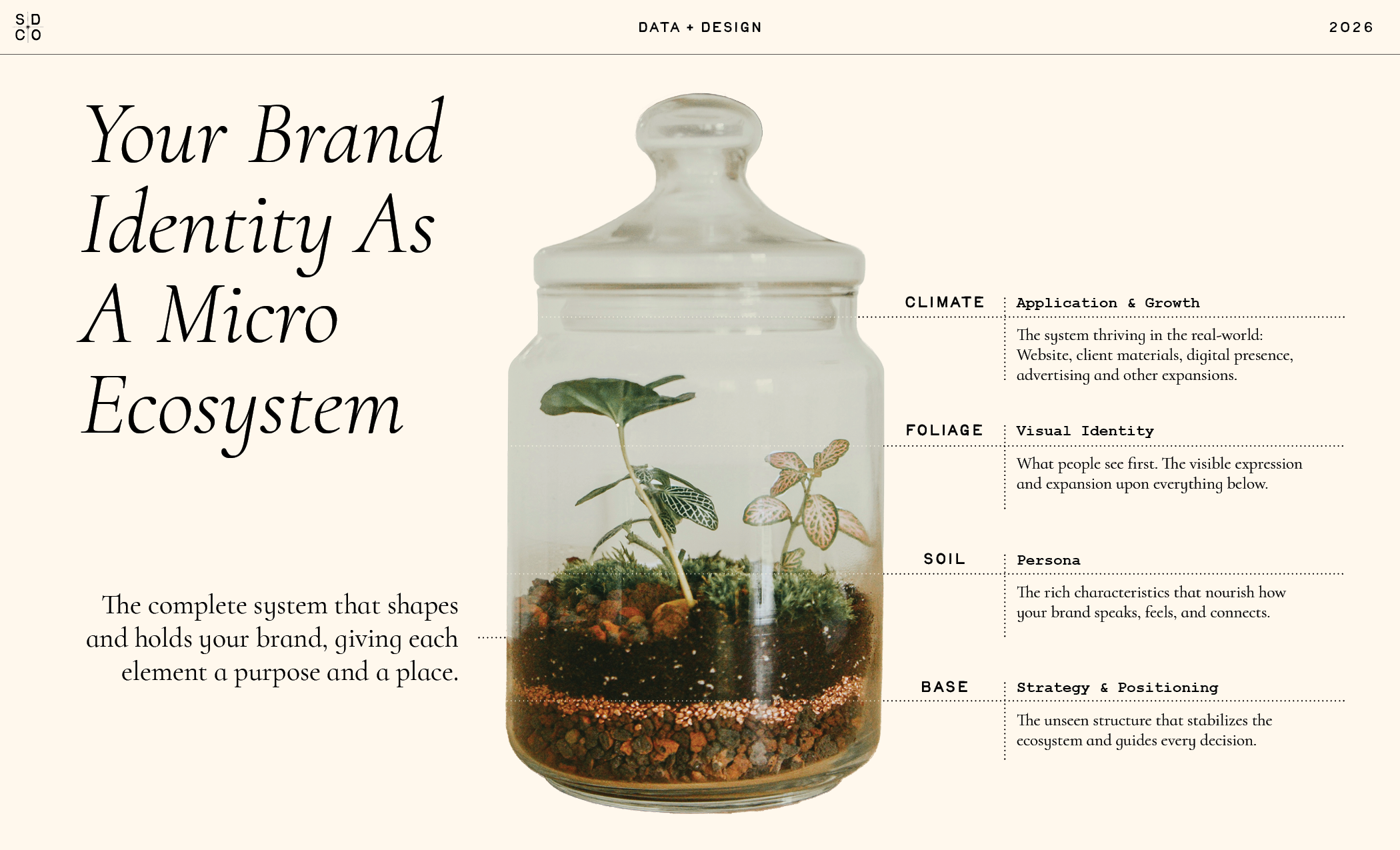
A brand identity is not a single visual asset. It is a system.
Many people begin by asking for a logo, a font, or a color palette. While those elements are important, they are only small parts of a much larger structure. When design decisions are made in isolation, they often create friction later across websites, marketing materials, and digital platforms.
A stronger approach is to think of your brand identity as a micro ecosystem.
Like a terrarium, every layer supports the layers above it. When the ecosystem is thoughtfully constructed, everything grows together in balance.
The Terrarium as a Model for Brand Identity
A terrarium works because each layer plays a role. Stone stabilizes the structure. Soil carries nutrients. Plants grow from that foundation. Moisture regulates the environment. Brand identity functions in a similar way. Each layer contributes to a complete and sustainable system.
The Container | Brand Identity
The container holds the entire ecosystem together. Brand identity is the complete system that shapes how a brand appears, behaves, and evolves. It gives structure to every design decision and ensures that each element has a clear role within the larger whole.
Without this container, the ecosystem has no boundaries or cohesion.
The Base Layer | Strategy and Positioning
The unseen structure that stabilizes the ecosystem and guides every decision. Brand strategy defines your positioning in the market. It clarifies what your brand promises, who it serves, and how it differentiates from competitors. This foundation supports everything above it, even when it is not immediately visible.
Without strategy, visual decisions often become inconsistent or reactive.
The Soil Layer | Brand Persona
The rich soil that gives the ecosystem its character and nutrients. Brand persona defines the emotional presence of a brand. It shapes voice, tone, personality, and the way a business communicates with its audience. This layer allows the brand to feel human, recognizable, and relatable.
Just as soil nourishes plant life, brand persona nourishes communication and storytelling.
The Foliage Layer | Visual Identity
The visible expression that people encounter first. Visual identity includes the elements most commonly associated with branding: logos, typography, color systems, layout structure, imagery, and graphic language. These components work together to create recognition and consistency across all brand touchpoints.
When built on strong strategy and persona, visual identity becomes clear, purposeful, and flexible.
The Climate Layer | Application and Growth
The environment where the ecosystem is experienced. This is where the brand comes to life in the real world. Websites, digital platforms, client materials, packaging, and future expansions all exist within this layer.
When the underlying ecosystem is balanced, the brand can expand into new opportunities with clarity and cohesion.
Why Brand Identity Works as a System
Just as a terrarium thrives when each layer is intentionally balanced, a brand identity functions best when strategy, persona, visuals, and implementation are designed together. When one element is created in isolation, it often creates friction later. A logo may not scale well on a website. A color palette may lack accessibility contrast. A typeface may become unreadable on mobile devices.
Designing a system prevents these problems before they appear.
A cohesive brand identity strengthens recognition, builds trust with audiences, and supports long term growth.
The Ecosystem Approach to Branding
Thinking about brand identity as an ecosystem encourages a more thoughtful design process. Instead of beginning with isolated visuals, it starts with structure and purpose. Each layer contributes to the next.
Strategy informs personality.
Personality guides visual expression.
Visual expression supports real world applications.
When those layers work together, the brand becomes adaptable, resilient, and easier to grow.